Would You Like to Browse the Web from Obsolete Computers and Devices?Since the birth of the World Wide Web in 1991, the internet became the fastest-growing technology in human history. This rapid evolution sparked historic battles over who could offer the most content and the best user experience—so much so that the earliest web browsers became obsolete shortly after their launch.
Three decades of relentless technological progress left behind a mountain of hardware and software built for eras that no longer exist. The Web, which was originally created as a low-cost solution to deliver lightweight content (primarily text and images) worldwide to almost any computer, became extremely complex and heavy to process over time.
Boat Rudder was born to bring all that software back to life. Our goal is to rescue developments born from the dream of a fully connected world that were quickly abandoned due to the technology's own immense success. If you have a legacy machine connected to your local network or the internet, you can already test the experience by running the project locally or accessing this domain directly.
How Does It Work?
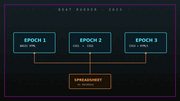
Boat Rudder is a CMS (Content Management System); this means you can only browse content created using this system (this project is not a proxy that translates websites). To achieve true retro-compatibility, the server analyzes the incoming browser and classifies the response into break points we call "Epochs", adapting the HTML, CSS, JavaScript, and data on the fly:
| Epoch |
Years |
Technical Specification |
Example Browsers |
| -1 WAP | 1999-2005 | WML 1.1 · Latin-1 / WBXML · No CSS or JS | Nokia 7110, UP.Browser 4–7, Neomar, WinWAP |
| 0 Text | 1991-1995 (and modern text) | HTTP/0.9+ · Subset of HTML 2.0 · No CSS or JS | Line Mode Browser, Lynx, Cello |
| 1 Early | 1993-1996 | HTML 3.2 (+ font face, cell bgcolor) · Latin-1 · Tables · No CSS or JS | NCSA Mosaic1, Netscape 2, Internet Explorer 1 |
| 2 Middle | 1997-2006 (and pre-2021 modern) | HTML 4.01 Transitional · Inline CSS1 (+ a:hover) · JavaScript 1.0 | Netscape 4, Internet Explorer 5 |
| 3 Modern | 2021-present | HTML5 · Modern CSS (Grid, Flexbox gap, inset) · ES2015 | Chrome 87+, Firefox 66+, Safari 14.1+ |
|
|
|